Episode Transcript
[00:00:06] Speaker A: Welcome to Kendall speaks.
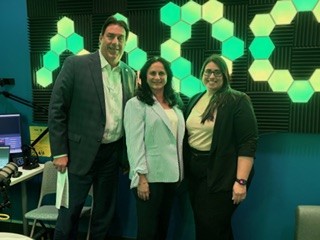
[00:00:11] Speaker A: I'm Dr. Brian Stewart, Kendall campus President. And today we have a group of very talented and amazing faculty with us.
[00:00:22] Speaker A: First we have Dr. Kimberly Kaufman, professor of Social Sciences.
[00:00:25] Speaker B: Welcome to thank you and thank you for having us here.
[00:00:28] Speaker A: Also with us is Dr. John Frazier, Senior Associate professor of Arts and Philosophy.
[00:00:33] Speaker C: Welcome and thank you very much for having us all.
[00:00:36] Speaker A: And then one of our returning folks has been here quite a few times and for a number of capacities is Dr. Steven Johnson, professor of World Languages. Thank you for being back.
[00:00:43] Speaker D: Good afternoon. It's great to be here.
[00:00:45] Speaker A: It's great to have you guys here. We're going to talk a lot about academics today, but you guys do more than just what's in the classroom. And so I want to make sure we bring a lot of those kind of discussions into play. But let's first let's start with you, Dr. Frazier. Talk about your journey.
How did you get to Miami Dade College and give us a little, I know it could go wise but tell us some of the highlights of how you became a Kendall campus professor.
[00:01:08] Speaker C: Well, I grew up in rural Ohio and really from the very get go I knew that I wanted to go off to college. Like almost no one in my family, I'm a first generation student like so many of our students. So I share a lot of their story.
And you know, I grew up in the age in the 1980s before the Internet. And so I as a geek, early childhood, you know, I very much I looked at atlases, I wanted to travel the world and I knew that was part of my trajectory. So that's something I specifically looked for when I was going to go away to college. Places that had study abroad, that had international kind of opportunities. And so when I went off to college I was actually going to be a chemistry major and I went to a study abroad group that changed my life forever in Africa, in Nigeria. But unfortunately a civil war kind of broke out while I was there. And so I changed my major because I saw the power of the way art kind of impacts and changes.
And so I came back and suddenly became an art history major, specifically studying African art. And so that trajectory has led me all over the world studying different people and working. You know, I've had some really interesting experiences. I got to live with the Baca Pygmies in the Central African Republic, right.
I worked with, I was in a Rwandan refugee camp really 11 days after the Rwandan genocide ended in 94. And so all these experiences kind of led me to different educational opportunities and eventually, when we were looking to settle down, the university professor kind of looked a very appealing career because I could do the travel, I could actually educate individual students. And Miami Dade College, when we were doing a national search, really did come up on my radar because of the work they've done so much in kind of outreach and kind of working with people who really are coming from very poor immigrant backgrounds in many capacities. And that's a population I thought I really could help because they kind of shared a lot of the same things that I went through. So Miami Dade College is kind of a perfect fit for me.
[00:02:54] Speaker A: Me. That's great. That's exciting story. Thank you for sharing that. Dr. Kaufman, what has your journey been like to Miami Dade College?
[00:03:00] Speaker B: Actually happenstance. So I actually.
I was born in South Carolina and we grew up in Jacksonville. And while I was in Jacksonville, I worked for a bank, for Barnett Banks, and for human resources. I was an executive secretary. So I heard you mention being at loss without someone earlier today. Yeah, I get it. And so the day that we found out that we were being sold, I happened to be with him and we had to go out to talk to his direct reports to let them know he worked for the management operating organization. So it was a very lucrative position.
So we were on our way out there and he said, what are you going to do? I said, you keep telling me I have to go back to school so that I can go ahead and get promoted. At the time, I had an AA from Brevard College in North Carolina, but I didn't have another degree. And that was in 1999.
And so I quit. And he was all for that. I quit. I went to the University of North Florida. Within three years, I had a bachelor's and two masters master's in psychology and criminal justice. And I got a chance.
There's a whole story how I got to fiu, but I got to fiu. I was offered there, but also at UC Irvine, so I came to fiu. And while I was here, I taught as an adjunct at Kendall and also at west and also at Meek and also at north and also at Homestead.
And my chair here at Kendall Campus wanted to hire me. So I came in with these guys.
We had the best cohort in terms of size, I would say, and also the best period.
There were 93 of us, 94 of us the year we came in.
So that's how I got here.
[00:04:47] Speaker A: Wow. Well, that's a great story and it's great that you share that with our audience. So.
Because both of you found your. Your niche here, And I know Dr. Johnson has before because you've talked about your journey. But remind us a little bit how you got to the Kendall campus.
[00:05:00] Speaker D: Similar to Fraser, I was really interested in travel after I graduated high school. So I did everything possible to be able to do exchange programs. I participated in high school exchange as well as study abroad in college. So I was originally a business major, and I decided I would do international business to blend in my love of travel with what I thought would be my love of business. And my first job after graduation was not what I expected.
I was not a good fit for the nine to five.
You know, sitting in a cubicle with a tie on all day long, that just wasn't me. I needed to be around people. And so I went back to grad school school. I eventually got my master's in, in both German and teaching English. And then I started sort of going around the world. I taught English in Brazil, in South Korea, I taught in Germany, I taught in Switzerland, many different places. And then I ended up back in the States for a while in California and then in Texas. I was in Texas right before I came to Florida. And I was working with international students, but very affluent international students who had lots and lots of resources and they were gonna be successful no matter what I did. And so I started looking at community colleges because I wanted to work with more first generation immigrant populations. And I was either looking at going to Arizona, California, or to Florida. And then I ended up, thankfully here in Miami in my job search. I ended up here.
And I've been here for over 20 years. Been a great. It was a great decision.
[00:06:40] Speaker A: Wow. How long, Dr. Frazier? How long?
[00:06:42] Speaker C: 15 years.
[00:06:43] Speaker B: 15.
[00:06:43] Speaker A: 15 and 20. Okay, so I'm the baby of the bunch. Well, let's talk a little bit now about what inspired you to become an educator and what continues to motivate you in the classroom. We'll start with you, Dr. Kaufman, if you don't mind.
[00:06:54] Speaker B: Oh, of course. I actually, my plan was to go back to human resources. I wanted to be an ombudsman.
You're going to hear a different story. And also, I started business too. You know, I was doing and that kind of connection.
But while I was at unf, two things happened. I took a course. In my very last semester, I took two courses. One was in counseling. And I realized I could be a wonderful counselor, but I would take too much of it at home. And so I knew that was going. And I went to. I took a legal psychology class and we went to court and I saw a 12 year old testify and she was so strong and I just got hooked. So I went the legal psych route and because of this that the professor I was working with, I got to teach in her labs, in her experimental labs. But what really happened to get me started going completely to being a professor? They asked me if I would fill in for a professor before I earned my ba, if I would fill in for him because he had to go do a conference in Europe that was a really fast one. And they found out about it. But five minutes into the room I knew exactly what I was supposed to be doing. And when I came out, one of my mentors said, hey, you're one of us. And we knew it.
[00:08:12] Speaker A: You found your love.
[00:08:13] Speaker B: I did.
[00:08:14] Speaker C: Right now.
[00:08:14] Speaker A: That's a great story. Yeah, thanks Professor Johnson. Tell us your motivation and what.
[00:08:20] Speaker D: Yeah, I thought business was the right track for me. And while I was in that field I started doing sort of side work as sort of tutoring, teaching. And I worked with different populations and I just got hooked on. I was looking forward to those moments when I could go and teach something.
And so I, when I was in graduate school, I worked on the side as a teacher in a Japanese company. I was teaching English to Japanese businessmen. I worked as a teacher in a German school for Mercedes Benz for a while.
So I just really got the exposure to different age groups. I taught young kids, I taught adults, I taught teenagers. And it was really a great opportunity for me to see how the power education has to change individuals and then to change the world as a ripple effect.
[00:09:13] Speaker A: Wow, that's great. Professor Frazier.
[00:09:16] Speaker C: I think my journey started because I've always been a big thinker. I like the idea of engaging with the world's greatest minds and ideas. Aristotle, Plato, even when I was in rural Ohio and for me then. And so when I was looking to college and then travel around, I really got hooked and found for my meaning of life, which everyone has to find is really to make the world better. That's really what my call to action is in everything that I do. And so I started working and kind of getting opportunities that would show up to do internships in different parts of the world. Like I've worked and spent almost 10 years doing different refugee type of work in refugee camps in Africa.
I've actually worked at museums, kind of co designing different programs that have shown up. But really kind of the collegiate atmosphere is almost a perfect fit for me because I get the idea of not just me every day getting to work with the ideas of Picasso and da Vinci and Michelangelo and African artists. But I get to introduce a whole new world to students who probably have never thought not just about art, but about life. That way that art deals for my advantage is probably the most complicated subject in the world. I apologize for both of you.
Only because in order to be a true artist and understand it, you have to understand business and psychology and what people are doing. Cultural kind of competence, how language and visual imagery, it really does combine everything. I mean, just two days ago, I was having a conversation with a student on how Gothic cathedrals inspire us and make us think about neurotransmitters and chemicals, oxytocin. That's the point of an artist, is to have a bonding experience with God. And how do you do that within a visual artwork? So to be idea of being able to combine all these different interest levels, it's really kind of fascinating. So that's what kind of inspires me. There's always new information to learn and to relay to others in different formats. And that's also why I like to partner with these two individuals so much, is because I'm always learning new things from them that I can bring into the classroom at that same time.
[00:11:08] Speaker A: Well, talking about the classroom, one of the things I think about is how students change. And I used to think about every five years, that's when I needed to teach a class. But now it's even quicker than that. It's every two or three years. Talk about the technology and some of the ideas that you guys bring to your classroom to motivate your students.
[00:11:24] Speaker D: Yeah, especially with AI now the rate of change is just compounding. And so for a language professor, AI can really automate the language learning component. I mean, we have glasses now that you just touch the button and it translates signs.
It, you know, can speak into your ear the words that another person is sharing with you in a foreign language. So that technical part is really being assumed by computers now. But I still tell students that language is about thinking. And you can't.
You can't just give your thinking process over to a machine. You can't give away your creativity, your emotion, your. Your happiness, your sadness. You know, all of that is wrapped up in language. And so I really tell them how, you know, language is a tool to advocate for yourself and for others.
So you can use it for very practical purposes, but you can also use it to open windows and share into another culture. And that's really the. I think that language teaching in the future is going to be More about opening up new cultures, even within maybe learning the culture of medicine or learning the culture of business. Language has a role to play in opening up that world to our students. And so my job is to show them that yes, you can automate everything with an AI tool, but I try to introduce ethical and responsible ways to use AI in the classroom so that they still can develop their own voice, but they can use the tools that we give them in the classroom to open up new worlds of opportunity for them.
[00:13:09] Speaker A: You know, when I was at the medical campus, one of the stats I would quote is that in the year 2030, 50% of the jobs don't exist that we're going to have. And I think it's probably even a higher number now. And I think to your point, with AI, we have to prepare our students for that world. And so that's a great answer to that. Professor Frazier, what is your thought on technology in your classrooms and how do you use it?
[00:13:28] Speaker C: Building upon your private comment a Moment ago, about 50% of the jobs not being available. If you look at, I think it was the Harvard Business Review last year that the 10 most in demand jobs right now didn't exist five years ago. We are training all of our students, we all know this for a workforce that doesn't currently exist.
So thinking through that, you have to think through, all right, it's not just about the information, right? We have Google and we have all sorts of information. We have to be teaching that both hard and soft skills so that they have an advantage in the future workforce. Part of that absolutely has to be AI readiness, whether we like it or not. And there's a number of faculty I know who are reluctant to use it. It's part of our technology now. It's part of our everyday existence. And so if we don't start training for them, they're going to be hind in the job market, of course, future. So right now I'm on a Presidential Innovation grant where what I'm trying to do is gamify my curriculum. But what I'm trying to do as much as I possibly can, and the results so far are pretty good, is that I'm trying to get students to develop games within class that bond them together. So ironically, I can get them off the screens out in the classroom to do change making and things outside of the classroom as a cohort model. And the results so far are pretty good. Like if I look at it, we have a thing at Miami Dade College called the Civic Action Scorecard, the CAS that's offered through our Institute for Civic Engagement and Democracy. And my numbers of students doing that every semester is up about 20% since I started kind of gamifying, getting them outside the classroom. Their memberships in student clubs is up 12 or 15%.
Their ideas, every. I shouldn't say every. About every other Saturday I go out to a different public site with museums, both for our museum studies program with students.
And Now I'm getting 72% actually showing up at least one of those events and many people showing up multiples. They've gotten so popular that now I'm inviting parents that are actually now joining us in different. So it's becoming a family event. So if we can use and leverage that AI and what it can actually do to try to bond people together. I think that's the sensibility on some post Covid. We've really lost. Right. Our students are struggling with social interaction. So if we can provide them a cohort, particularly when we start gamifying and we're dealing with particular issues. The nice thing about the arts is any United nations sustainable development goal you're interested in, it's covered in the arts. We are the critiques of society and always have been. That's one aspect. And then along with these two individuals, the other thing that I think is most important is that yeah, education is changing, but we're also learning a lot more about education.
There's now new data and qualitative and quantitative data coming out in what's called high impact practices. So I'm trying to teach now only with high impact practices.
Problem based learning, undergraduate research, communal projects that they work in writing, intensive abilities so that they really do have an experience on some of that. These are all skills they're going to need for the future workforce. Even while they're learning art history or languages or psychology.
[00:16:21] Speaker A: That's a great answer, Professor Kaufman, can you follow that? That's some good stuff there.
[00:16:25] Speaker B: Yeah, it was some good stuff there. I actually.
So we did work to create an entire plan work like eight different training sessions, right. For project based learning here at the college. So that is out there and active. And what Frazier was just discussing is what we should be doing in our classes. It's totally interactive. Students are the ones who are leading. They're coming up with the project ideas. And so the tools that I like to use are the tools that would help them to ask their own questions.
I think it's so much fun for me to try to get them to start, for instance, with the use of Packback, because their first Week. They're scared to death of it because they want me to give them a question.
And we find out, and I'll ask them, when in your educational time, in what class has somebody asked you to ask the questions? And they basically say, never.
So what we're doing, when we're doing some of the activities that we're doing, we're using AI to let them create. In my research classes, the Introduction to Social Research class, I'm trying to teach ethical AI use. Just as I have them do packbacks so they can answer or ask their own questions, I also have them come up with their projects. So it's very pbl.
When we use the ability for them to be able to come up with their own questions, they start realizing that they have good questions and they start realizing that their projects matter and that they can come up with things that they can maybe change with. And so, same thing. I'm trying to bring it down to a place where anyone who was thinking about doing group work, group work is scary. Group work also is incredibly satisfying and helpful for students.
And there's one more tool, a new one. I haven't played with it yet. I don't know about y' all feedback fruits.
So I've used it a little. I've got a colleague at North Campus, Sarah Garman, who uses a lot and loves it.
So we have a lot of tools available to us to help us give students the opportunity to be engaging in their classes, just like we would like for them to be.
[00:18:41] Speaker A: What an amazing answer by all three of you. And I think you can. The audience can see the creativity of the, of the Kendall campus, these three faculty. So thank you all for sharing that. Professor Frazier, I want to go back. You were talking about community engagement a little bit. Let's talk now a little bit about how important that is in the classroom and with your teaching, your philosophy. And let's go around the table and talk about what role community engagement plays in your classroom.
[00:19:04] Speaker C: I think that's an excellent question, kind of to follow up in what we're talking about. And I think for me, community engagement should be the basis of all education.
Right.
Many years ago, when we were finding and funding financial aid for the first time, it was to create a citizen of really engaged citizens that could actually improve our democracy. That's where financial aid came from.
It wasn't just more aristocracy or oligarchy ruining our country. It was literally the idea that we had everyone actually participating. And so I think change making is the basis of everything that I do. So for example, when you come to my classroom the first day, rather than just giving you the syllabus, we're going to do an activity so I can show you. This is what class is going to be like. Be prepared. This is going to be interactive, we're going to be talking, we're going to be interacting, you're going to be working with your fellow students. And everything that I try to do is tied to the United Nations Sustainable Development Goals. So at any given point, if a student asks a question, why does this matter? Well, it's on number six on United Nations Sustainable Goals. Is that on clean water? Is that on management? Why would the Roman aqueducts have something to do with this? How does it relate to where we are today? So we kind of try all of our lessons from the past and history to give us an idea of where we are in the future and.
[00:20:13] Speaker C: What'S going.
Every student in most of my classes will plan a change making event or plan a change making action that they have to do. All of them have to be public. Because the one thing I do not want is I never want a paper to come into me that just me and the student sees.
In the art history course, I wanted to have some civic action. So something that they're doing, are they going to publicly display that artwork? Are they going to try to get it published? If they're doing an event, who else are we inviting? How do we expand the audience? Because that's really what I believe education is. It's the idea of helping students create opportunities that the world themselves, their families can be better based upon the content that we're learning. Roman aqueducts, 30 miles away from Rome, right here we have our aqueduct. Basically, if you look at the Florida everglades, they're exactly 30 miles away from here. What can we learn from that connection? So we do that in everything that we're working on.
[00:21:03] Speaker A: Wow, that's a great answer, Professor Coffin. Talk about your role with community engagement.
[00:21:08] Speaker B: Everything that I do is planned so that people can apply what we're looking at, what we're thinking about to their lives, to the civic world, to voting, to thinking about, you know, laws that are already in place.
So I try to get them to really consider.
[00:21:30] Speaker B: How would this apply to something? How would this apply here? How would this apply here?
I'm not going to say too much more because I think that Fraser just named it, but I think that we are trying to create change makers here and we're trying to be change makers here. And I think we all are.
[00:21:49] Speaker B: We're just building their capacity and building their agency and their understanding. They have voice and they have meaning and what they think matters. And so how can they apply what they've learned here out there?
[00:22:03] Speaker A: That's great. Dr. Johnson, you have a particularly unique view as our Phi Theta Kappa advisor, but as well as in the classroom. So maybe you could talk a little bit about how you go between both of those groups.
[00:22:13] Speaker B: Right.
[00:22:14] Speaker D: Well, I completely agree about the importance of change making. I've learned from both of my colleagues here at the table. I mean, we share ideas always. And I really learned a lot from them on how to engage students. And so part of the ptk, the Phi Theta Kappa honors, one of the pillars is service.
And one of the things that I want to always remember is service is not just for an honors student, it's for every student at our campus.
[00:22:40] Speaker B: Totally agree.
[00:22:40] Speaker D: And I work with the students who have just arrived in Miami. And many of our students come from places where their voices have been stifled, they've been repressed. They're coming from places where the government doesn't want them to speak up and they don't want them to self advocate.
And so we, I teach them that Again, back to learning language, learning English.
It's not just about learning the nouns, the verbs, the sentence structures, but it's about learning what it means to be American, what it means to be an engaged citizen, what it means to have freedom of speech, to be able to go out and write a letter to your representative, write letters to your council representatives. So I want the students to learn how our systems work.
I think part of educating new immigrants is to teach them how our communities work and how we depend on each other to carry some responsibility and give back to our communities. It's not just someone at the top that's controlling everything around us.
We have a responsibility. We have a role to play in that. And so whether it's an honor student, whether it's a brand new immigrant who's just arrived into Miami, we want them to recognize that you are a complete member of our community and you do share some responsibility in being engaged or active. And one of the best activities I do for my language learning students is I encourage them to partner with community role models, whether it be in their future career or in a community organization. And they shadow them and they interview them and they ask questions, try to get them to use English in Miami. It's kind of hard to do sometimes, so I sort of script it out. And they work with, maybe they shadow a nurse or they Shadow a teacher in an elementary school. And a lot of them, through that experience, they end up volunteering. And in those places, they volunteer at a hospital, they volunteer at a school, they volunteer at an aftercare center. And then, you know, they come back and say, you know, this was a really meaningful assignment for me because it gave. It opened a door for me, and I sort of grew an attachment to a particular person or a particular career. And so I think by putting our students out in the community, it's much more than just for the purposes of an assignment where they give us their work and we give them a grade, but it helps them grow roots in the community, and it helps them realize the important role that they can play as a student.
[00:25:13] Speaker A: Yeah, you know, several years ago, we talked about the flipped classroom. And to me, what you guys are describing is more like a holistic classroom where it's not what goes on in the classroom, but outside the classroom and how you translate that to the future. And so those are some great answers.
Dr. Kaufman, talk to us a little bit about what surprising social trend that you see today in today's college students.
[00:25:34] Speaker B: Well, one of the things Fraser actually kind of alluded to a while ago, you know, I caution using the phrase post Covid, but I believe that's where part of it came from.
Our students are reticent, and they seem a little scared and a little nervous about connecting with each other and getting to know each other, working in teams. And yet.
[00:25:57] Speaker B: I can tell you that we can create situations in which they become more comfortable doing that. So one of the things right now I'm teaching three research methods classes, and it's the introduction to Social Research, and I've mentioned it a couple of times. It's a brand new course at the college. It took us 10 years to get that course in.
At the community college level, it took a lot of work. Pretty proud of that. We've got our first two honors sections this, this semester and last semester that we've taught here at Kendall, or that I did, I will say. And then we have people who are teaching it at Wilson and West, too.
And what we're finding is that one of the things that helps them to connect to each other is to get them to pick their own projects and come up with their own ideas so they realize that they have interests that are shared. But another opportunity that I've started taking is just meeting with them saying, hey, I'm right here.
I want to meet with you twice, y'. All. Tell me what you need. We'll talk about it. We'll brainstorm together and over the, like 45 minutes that I meet with them, they'll come up with, we'll start talking to each other and they'll start communicating and relaxing with each other and they'll tell me what they need. And it may be completely different than the team, but that's fine. You know, it gave us a place of community. And I think that what we can do to help them with this nervousness that they have is to find people like we have people.
One of the things Fraser says a lot is that we're great humans. And we all three, all four, I think, are great humans in this room. And I think that it gives them a chance to know that as well, too.
[00:27:36] Speaker A: Well, that's a great lead into my next question. What's something? And we'll go, whoever wants to hit this one first. What's something about your students that might be surprising that you've learned?
[00:27:44] Speaker D: I can speak about the EAP students, for example. They often come here with very high level certifications in other fields, and they really just need the English to open up access to whatever they were doing in their home country.
I've had students who've already completed medical school back home and they come here and they start from zero, you know, and they're working their way through the ranks again.
So that's something that surprised me about Miami when I first came here. And it, even today, it's still, you know, it continues to surprise me.
Also, I, I think that our students are, they learn to be very resourceful. Yeah, I think that necessity is truly the, the spark of invention. And so I see a lot of my students who are, they have this entrepreneurial spirit and yes, they're a full time student, but they're also, maybe they have a side business that they're running on Instagram.
And I always encourage them to share what they're doing outside of the class to inspire each other, but also just to help support each other. We've got a student in one of my classes now and she runs a cake decorating business on the side. And so I'm like, okay, everybody order your next birthday cake from the student. Or just to show them that there's power in and sharing your skills with your side hustle. Networking is super important and, you know, share your story. Don't be afraid to tell people what you're doing because you never know who your next customer is going to be.
[00:29:20] Speaker A: That's right. So what surprised you?
[00:29:24] Speaker C: Well, kind of building upon that as well. I Think one of the interesting things is in the age of social media, many of them are afraid to speak up because they're afraid to be shot down. Right?
There's a real fear that people are, well, I can't talk about that. And I'm like, well, this is an academic classroom. Of course you can talk about that. It doesn't matter what side of the aisle. If we want to talk political framework, this is an open dialogue conversation. We are going to treat everyone with respect. We're going to evaluate the idea. What do we think about the idea as it shows up? And I think we are so afraid to have this. I said, if you look at our generation, to be blunt, we've kind of messed up, right?
We've left a mess of the world for this generation. I said, you have to fix it. And you know, the only way you can fix it is through collaborative dialogue. So as much as we can with those team meetings, we have to teach collaborative dialogue. Otherwise we're going to be in the same mess for your kids. Right? So that has to be part of our educational program. Whether that's with our, you know, within PTK or within our, you know, I do model United nations, right. Whether it's in that capacity. But we need that available to everyone to be able to have an open, honest dialogue, particularly when we're talking about, right, what is the best form of government, right. Is it democracy, Is it republic? Even our founding fathers, many of them didn't really think democracy was the way to go. They spoke very negatively about it because 51% could rule everyone else. And so they put in checks and balances. Those are real conversations we need to have today. For the modern day world Constitution was supposed to be updated every 20 years. We haven't had a constitutional convention in over 100 years. Now that's a real problem. It's not kept up with technology. So how do we have those conversations with our students?
[00:30:58] Speaker A: That's great. Anything you've noticed, Professor?
[00:31:01] Speaker B: Well, I was just thinking, I was remembering as I was talking about the time that it took for us to get the course in and I was remembering that part of.
And sadly, y' all are going to go, oh, really? Part of the reason why it took so long was we had to pretty much convince our own full discipline, but also other people that our students were ready for a research methods course, that they were ready at their first and second years to be able to do this and to be able to be strong at it. And they are stellar at it. I can't Tell you the difference between my honors and non honors classes and research methods. And I think that is one of the things that makes me incredibly proud of them.
[00:31:44] Speaker A: That's great. All right, Frazier, you're going to start with this question. Okay, this is right up your alley. If you could live in any historical era for a week, what would it be and why?
[00:31:54] Speaker C: Without question, it's 15th century Florence.
In the Renaissance, at one point you had Michelangelo da Vinci basically residing in the same building, right? The Medici Palace. Imagine being able to walk from knocking and there is Da Vinci and being able to talk to him about the world and then he's the elder statesman and then walking down and there's this rash young buck coming up, like he kind of sucks. Like he literally does think of himself because you know, he does painting, I do sculpture, and that's the best. But just being able to have the dialogue at the same time. Two doors down is Galileo. Four doors up the other way is Donatello, who has just passed. You have his masterpieces. Machiavelli is basically in the same time frame writing about the prince. Right? The foundation of Western civilization, the foundation of, of humanities, which I love and teach so much about, that is the basis that we still have for all. And we spend a week talking to the funders, the creators, the politicians, the scientists who are challenging all that information. Incidentally, this is what I want my students to do as well. I said we don't always know the answers. You should challenge the information as it comes out because there's all sorts of new innovations and ideas coming out that challenge our educational framework. Now we have to deal with it and make sure we're right within the classroom. That's what these thinkers were doing.
[00:33:09] Speaker A: I wish the audience could see the glee on your face as you answered that question. That was a great answer. Dr. Johnson, what about you? What would your week look like?
[00:33:17] Speaker D: I'm really fascinated recently about Native Americans. And so I recently have taken some vacations to Canada and spent some time on a reservation in Quebec and really learned about all the very complex system of tribes and just the way that North America looked before any of the Europeans arrived here. So I would probably want to go back and just look and see how did people live? How did people use medicine? How did people heal sickness back then? Or how did they survive brutal winters or terribly hot summers? I can't imagine people living here in Florida without air conditioning back then. You know, just to. Just to maybe get gain some of the wisdom that we've lost over the centuries and Bring back some of the connection to nature, perhaps. I don't know.
It's hard for me to pick one particular century or one particular date, but it would be before, you know, the colonial period here in North America or Central or South America America, just to see what it was like.
[00:34:27] Speaker A: Before we go to Professor Kaufman, how many languages do you speak or how many do you wish you could speak?
[00:34:32] Speaker D: I wish I could speak 50, so. But no, I speak.
I would say I can. I can communicate in four languages.
[00:34:41] Speaker A: Wow.
That's amazing. That's great. All right, Kim, what would your week look like? Where would you be? Who would you be?
[00:34:47] Speaker B: I know exactly what I would be doing. I would be living in the 1920s, and I would be a woman in the 1920s, 20s, and I would be out there fighting Comstock laws and getting arrested and making sure that I, you know, talked about reproductive rights and voting rights for women. So that would be my dream time. Okay.
[00:35:08] Speaker A: All right. This might be my most favorite question to ask you guys, because you three do make a huge impact on this campus. And this college Professor Frazier, you just were at our west campus this afternoon doing things, and I know you guys are all around.
[00:35:20] Speaker B: Yep.
[00:35:20] Speaker A: Share with me the moment you realize you truly were making an impact with your students.
[00:35:25] Speaker D: I'll jump in first. I guess for me personally, it was. I ended up in the hospital.
I was in Baptist Hospital, and I was kind of. I was there alone at the moment, you know, trying to figure out, okay, what am I going to do? This is pretty serious. I got to take care of this health issue.
And somebody came in the room to give me an injection, and it was one of my students. Students who had gone through the nursing program and came in, and. And so I'm. I'm trying to. You know, sometimes you're good at faces but not names. So I shouldn't remember the name, but I knew that that was one of my students. And I was like, I'm sure I was really nice to you because I'm always nice to the medical students.
[00:36:05] Speaker D: You never know when you're gonna. You're gonna be in a. In a room, an exam room with one somebody. So for me, personally, it was just. I was proud to see that my student had come through my class and gone on to get a nursing degree from here at MDC and was working in a local hospital.
And, you know, not only were they taking good care of me, but they, you know, remembered me and saw my name on the. On the patient list and came by, you know, asked to be assigned to me. So to me that was like, you know, we're kind of all community. We kind of take care of each other and, you know, you put good things out into the world and then hopefully maybe one day it comes back to you.
[00:36:42] Speaker A: Exactly, exactly.
[00:36:43] Speaker B: That's beautiful. I, I'm going to say something similar, but it wasn't. Although here's, here's an interesting one. One of the professors that I've taught in FSA who is no longer a professor with us is one of the doctors that's at one of the urgent cares that's near in Pine Crest. And so it's been really helpful to my mom and I both. And so that was beautiful. A couple of weeks ago, I was in the elevator and coming out of the garage, I was kind of tired from the night before and I was coming in and there was a student with me or student. I'm sorry that the. When the door opened up, he walked in, he goes, professor Kaufman, I need to tell you something. I want to come by and talk to you about the personal effectiveness course. I want you to know that I was going through something during that time and I don't think I would have made it in school if it hadn't happened, if you weren't teaching it, if we weren't together.
And that stuck with me.
There are so many things like that that have. But that particular one, yeah, that was it.
[00:37:43] Speaker A: That's a great story.
[00:37:45] Speaker C: I think the same thing. It's the idea that you can have such an impact that you create community. So we've all had these experiences.
Probably my favorite, and this one I might even cry over. So I apologize in advance. Happened three years ago in my honors college class. I always tell them what we talk about, what education is for, what's it meant to do, prepares you for the modern day world. And then we talk about. One of our major limitations is that particularly from my perspective in art history, looking around the world, is that we're not teaching you about our competition in the future. My students have never had a class. They know nothing about China. If China is the rising superpower, which we all know it is, and potentially might overtake America. Even during their lives in terms of economic power, military power, with the Belt Road initiative, they need to know that. So we wanna kind of build this sense of community.
And so they created a box that goes out and every semester they do this that goes out into Miami Dade College or Miami Dade county public schools to try to educate the next generation what they weren't educated and so we've got a number of these boxes floating around. Well, one day three years ago, this honors class, they went out to do it for the first time, kind of pilot model, and there was a girl that was sick, and the girl actually had been quite sick for a while and was in the hospital.
So they took it upon themselves, these four kids, right? 20 year olds, they went to the hospital with some of the students the following weekend, and they gave the same program to those kids. I was like, that's amazing.
At that point, it's not about the box. It's about creating good humans and kudos to their parents, and I'm glad and thrilled that I had a small part of that. But what a powerful experience, not just for that child, but what, you know, giving back to your community.
[00:39:22] Speaker A: Yeah, exactly. That's great. Those are great. All three stories are great. All right, two questions. We'll go around the table quickly here. What's one piece of art or music you think everyone should experience at least once? Professor Kaufman, you go first.
[00:39:34] Speaker B: We were talking about this right before we walked in here, and so I'm going to tell you the one that I think, and I think you'll probably appreciate this one.
Everybody should watch Field of Dreams at least one time. And I've watched it. My sons will tell you at least six times, 65 times. I know all the words all the way through. I love baseball. I love the sound. I love the smells, you know, but also just that connection.
Oh, okay. I can't give it away, but you should watch it.
[00:40:04] Speaker A: Professor Johnson.
[00:40:05] Speaker D: For me, it would be any Bach fugue in a Gothic church in Europe.
[00:40:11] Speaker A: Okay.
[00:40:12] Speaker D: In my last study abroad, I took a group of students, the ones who wanted to go, we went to a mass.
And I knew at the end that in this particular church, they always do Tocca and fugue at the end of the service. And I wanted the students to stay. You know, they were like, okay, let's leave, let's leave. I was like, no, we have to stay till the end. And then at the end, when that. When they played that, it was just. They were just, you know, their eyes and their ears were just. I could see, like sparks, you know, fly.
[00:40:40] Speaker A: Well, I think you need to plan a trip for us to go with you and be a good.
[00:40:44] Speaker C: Okay.
[00:40:44] Speaker D: All right.
[00:40:44] Speaker A: That's. That's a takeaway from this. Professor Frazier.
[00:40:47] Speaker C: Mine would be any African masquerade to be in a different. Because art is used very differently in Africa than here. It brings the community together. It heats people up or it cools people down. So it's literally used as a power mechanism. Many kind of capacities, whether you're Christian, you're Muslim, your animist beliefs have a combination of them. There's something special. And there was an African masquerade that changed me from being a chemistry major to be a. An African art historian. Right. So that was called the. It's from the Ibo group in Nigeria. It's called the Ijele I J E L E. It's. It's an image of the world. So anything that they do or any place they travel, they bring something back from the community to put on that masquerade. So it's always changing, and it's always a community function. So everyone in the community comes out to see this. This masquerade once a year. So it's a communal environment. And, you know, outside of parades, we really don't have that kind of environment anymore. Unless your team's in the Super Bowl.
[00:41:40] Speaker A: Yeah, that's right. Well, there's my second trip. Let's plan that trip.
[00:41:43] Speaker C: Yeah. It's not going to be my Bengals.
[00:41:44] Speaker A: No, it's not. Or my Cowboys this year. All right. If you could invite any artist or philosopher, living or dead, to guest lecture in your classroom, who would it be? Dr. Johnson.
[00:41:54] Speaker D: I think that we need peace in the midst of chaos. So it would be someone who could bring that into the world. I don't know, maybe Gandhi, Jesus, somebody like that. That could just help us.
Help us sort of work through all this noise and. And just realize, you know, that we can detach from all that.
[00:42:14] Speaker A: So. That's a great answer, Professor Kaufman.
[00:42:16] Speaker B: William James, for that reason, William James talked about thought as a stream, consciousness as a stream. And I would love for my students to have William James come in and talk to them about that idea and about how, as a stream of consciousness, I. I heard you use the word rip a while ago, one of you. And I'm.
I love ripples. I love watching them. I love thinking about how one little move changes everything and changes everything differently.
And so I would love for him to be able to have that conversation with my students.
[00:42:51] Speaker A: That's great. All right, Frazier, who do you.
[00:42:53] Speaker C: Leonardo da Vinci.
[00:42:54] Speaker A: Without question.
[00:42:55] Speaker C: I mean, the only other option even on the menu for me would be Aristotle. These are individuals who thought outside of the box to change the world. Leonardo da Vinci, besides all his engineering, he does theatrical, he does art, he also becomes one of the world's first vegetarians in the Western world because he recognizes its cruelty towards animals. So he's really thinking so far ahead that our world is still kind of in his wake in what they're producing.
[00:43:17] Speaker A: Well, maybe AI can help because those are all some great, great answers that. All right, my last question. You know, we're all about students here at Kendall. What's one piece of advice you might give our students that are listening today?
[00:43:29] Speaker B: Self care. Take care of you. Okay. But. But do it in a way, you know, we, we. We're teaching strategies for mastering your stress, not. Not having it master you. And so know that it's okay for you and safe for you to have self care and also to.
To have voice.
[00:43:50] Speaker A: Yeah, that's great. That's great.
[00:43:52] Speaker C: Can I give three because.
[00:43:54] Speaker A: Sure, sure.
[00:43:55] Speaker B: One.
[00:43:56] Speaker C: Is that kindness?
[00:43:57] Speaker B: Yeah.
[00:43:57] Speaker C: Right. Kindness matters. It really does.
Look at.
Even on some level, if you have an issue that you're not great at, if you're kind, people will help you so you can help people in the future. I cannot overemphasize that. It makes a huge difference.
That's number one. My dad had a quote that he was not a very pensive man at all Rural Ohio. He said that surround yourself with excellence. So surround yourself with those people that make you look good even when you are not looking your best because they will help you out through that situation. You've got to have those people, these two individuals here, we talk about it. They're outstanding human beings. I know them well.
And then the third idea is that when you come here and I know these two feel the same way, I tell them the last thing I said as they're walking out that door that last class is that once you're one of my students or once you're a Frasier student, you're always a Frasier student. I don't care where I am, what age, you always can reach out for help. We want to have that human bond on some level that we're on this journey together. And I'm here just a piece of the cog of what's actually helping you. But I will always be here to help you.
[00:44:58] Speaker D: You.
[00:44:59] Speaker B: I'm going to add one more too. Or two more. One. You're never too old to go back. I did it. Other people have done it. You're never too old. And just keep finding the route around the thing that you feel is an obstacle.
Ask for help. Be willing to ask for help. Look for another alternative. Be okay with the new choice, but keep going.
[00:45:24] Speaker A: All right, Professor Johnson, you get three, too, if you want.
[00:45:27] Speaker D: I'll just take one. I'll take One, I think, but it connects to Frazier's idea of kindness, I think. Knowledge, we often say knowledge is power.
Knowledge is a tool. And like we know all tools can be used for positive or negative outcomes. And so I just encourage people to use, to take what we learn together in our classrooms, in our campus, in our clubs.
Take that, whether it's knowledge, whether it's new skills, take that out into their world and help other people with it. Just do good things with it.
[00:46:00] Speaker A: That's great. Arin. I'm really nervous about this last part. Professor Johnson knows what I do at the end of all these broadcasts and that's turn the microphone around and let you ask me a question. So I'm going to do that right now, but I'm a little nervous about what I'm getting ready to get. So who's first?
[00:46:14] Speaker D: Can it be a repeat question?
[00:46:15] Speaker A: Sure. So, yeah, well, maybe it'll be a different answer. Since I've been here a little while.
[00:46:19] Speaker D: Now, I'm just fascinated. You're the first college president I've worked with in many years that wakes up at 7am and teaches classes. And I just wondered what is, you know, you say that that reminds you of what our students are like. And I'm just curious to know, from the last time you taught until this time, what changes have you seen in education?
[00:46:42] Speaker A: Well, that's a good, that's a really good question.
I have to preface it by I've never taught honors to college students before, so that's a little unique.
But what Professor Kaufman said kind of earlier resonates.
You know, I added a project to a math class. Who could think you could do a project in a math class?
Holy cow, have I got some amazing projects. And I think that's one of the biggest changes I've seen in these students and other students. I actually worked with some of our athletes last semester in, in statistics, college algebra and intermediate algebra.
But that's the biggest thing, just the knowledge of these kids. And I think back to something you said, Frazier. If you think about a college student today, think about what we had to learn. We're all about the same age. Think about how much history and everything's changed from the day we were in the classroom. How much these kids have to know coming out of high school. To me, that blows me away. Now they have tools. We never, we didn't have this tool, this iPhone. But that's, that's one of the biggest things that I've seen is, is how amazing our students can be if you give them an opportunity to perform.
[00:47:48] Speaker B: What's one thing that I love that one question that you haven't asked. So what's one thing that are your students and, and the rest of us would be really surprised to know about you?
Something cool and unique or not?
[00:48:02] Speaker A: Well, I never, I never saw myself in this role. You know, I saw myself.
My very first job was in a camp coaching kids.
They were disadvantaged kids. And when I went to college, I played college basketball. Frazier and I've talked about this, and I had to sign my scholarship and I wanted to put down coach. I wanted to be a coach.
My dad is a university president or was a university president. And he said, you can't be a coach. You know, in those days, your parents are different. I never told my kid you couldn't do something, but my dad said you cannot be a coach. No offense to coaching. I've coached over probably 2,000 games. That's another story. So the only thing I was good at was math. I only think I thought I was good. So I wrote down math.
And little did I know, when I was in my first class like you, I fell in love with the classroom.
I was teaching what we called cowboy calculus in the day. And in Texas, it was a very rural school full of cowboys.
And when you said you were in a cowboy calculus class, you were in the lowest class in the school. It was not a compliment.
So I was in a classroom of 168 students and I was the TA. I was keeping roll and grading homework and making good money.
And one day the teacher walks in and says, hey, I want you to teach class one day. I'm like, oh, sure, I'll teach one day. Well, one day came, I got up in front of that classroom and I don't know if you remember the overhead projector that had the roller, that's what she used. She would write on it and then roll it, then write on it. And so I went up there trying to do it and I'm sorry, sweating. And I said, forget that. And I went to the board and never, never left and fell in love with teaching at that point. And so all through my career, I've considered myself a teacher, even though I've been all these other roles and even today in this role, I still consider myself a professor, even though I'm not just teaching one class. But that's, that's the lens I look at things through. So you're still a professor.
[00:49:50] Speaker B: You are still. And you're an excellent one according to your students.
[00:49:53] Speaker A: Okay, well, thank you. I Appreciate that.
[00:49:54] Speaker B: You're welcome.
[00:49:55] Speaker A: All right, Frazier, hit me.
[00:49:57] Speaker C: My question is on how to create community, right? One of the challenges that a community college faces is that we have so many students that come in and then leave right away. Right? And we have all these great programs that we want to. So my question, money, not the option. Right? No problems, no limits. What could you do or what could we do that you've seen happen? That we can create really a community, almost like a four year environment on a two year campus? I've never seen it done anywhere. But I'm wondering, do you have thoughts on that? How would you do that?
[00:50:25] Speaker A: Well, first of all, when I walk the campus, I hear people talk about, oh, there's nobody in this building, there's nobody in that building. But I walk in Building 3 in the Science Building and I counted 53 people there at 2 o' clock in the afternoon. You walk by Starbucks and Shark Tank, you see people all the time. You walk into the to Building 8, where our cafeteria is, and you see people. The first thing I do is build dorms, not just for athletes, but for our students. Because I really think people want to come to this campus. They want to come to Miami Dade, but they really want to come to Kendall. I've been so impressed when I'm in the community with people that come up to me and say, hey, I went to south campus, or I went to the Kendall campus. And when they say south, that tells you something. That tells you that, hey, they were here long ago and they're still here. And so I think we have a better repertoire of students and connections out there than we use. And I think dorms will be the first thing to help with that.
And then there are things that come along with that, more food service and all that.
I really see our students stay on campus and I don't think a lot of our campuses can say that. And so I think we're well on our way to doing what your question is. We just need to surround ourselves with some infrastructure to keep our students here.
Well, this is more burgers and more. Well, we can do that. We can always grill hamburgers out. I'm always ready to get behind a grill, so.
Well, I want to thank the three of you for being here today. This has been an amazing conversation. This isn't the last time that you're going to be on Kindle Speaks. Thank you for all you do for students. You make me look good, which I know is not your goal, but the best thing you do is turn out great students. And thank you for that. And thank you for spending time being here today. You may not have wanted to spend a Friday afternoon talking to me, but I hope this is a podcast that a lot of people listen to because there's a lot of kernels of knowledge that I think will help our students. So thank you all for being here today.
[00:52:11] Speaker B: Thank you so much.
[00:52:13] Speaker A: I want to thank Christine Saenz, our head writer, Paul Klein, our executive producer, and Alex Bellows, our producer. Thank you for listening today, and goodbye for now.
[00:52:34] Speaker B: It.