Episode Transcript
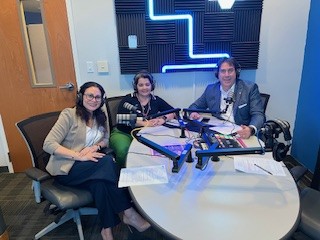
[00:00:11] Speaker A: Welcome to Kendall speaks. I'm Dr. Brian Stewart, Kendall campus President. And today we are talking about something very special here at the Kendall campus, and that's the student experience. And we're going to talk about that from the academic support side. We'll be hearing today from our academic leaders and Learning Resources, and then also from our tutors who work directly with our students. But first, Let me recognize Dr. Karim Diaz, our Associate Dean and faculty of Academic affairs. You've been here before?
[00:00:35] Speaker B: That's right, Dr. Stewart. Thank you.
[00:00:37] Speaker A: Jennifer Dipty, our campus director for the Learning Resources. Good to have you back.
[00:00:41] Speaker C: Thank you so much.
[00:00:42] Speaker A: And also Meredith Krall, our associate director of Learning Resources.
[00:00:45] Speaker D: Thank you. Happy to be here with us in
[00:00:47] Speaker A: the audience that we'll get to in just a minute is Leslie Alfonso, academic success writing coach, and. And Gretel Barreto, who's one of our writing tutors, and Nathaniel, who's one of our math tutors. So we'll be talking to them shortly. First, let's start with you, Director Dipty, if I may. For students who may not be familiar with the Learning Resources, how would you describe at the Kendall campus? And also you've had some new additions here in the last several months.
[00:01:11] Speaker C: So Learning Resources is. It's pretty special to me, and I think of it as really a space. Space where you don't have to be perfect at anything. We invite students, we invite faculty, we invite the campus community to come to us, and we'll figure things out together. You know, navigating college on your own is tough, and we feel like you shouldn't have to be alone in that process. And so whether it's a tutor, a librarian, a staff member, a student assistant that can help you navigate that, what we're all about. And so sometimes, you know, we're in the hub, and so we get a lot of different types of questions, and I think it's just important that students know they're not alone. And so Learning Resources is that hub, that support system for any type of question that you may have.
[00:01:59] Speaker A: And not only that, but you have so many events in your space, too, that I have to give some kudos to that. You know, we have school for advanced study students in there, our dual enrollment students, our college students, our athletes, plus all the events we recently had, Women's History Month and. And kudos to your whole team for all that as well. And Meredith, you're part of that. So we'll go to you next. Talk a little bit about what learning doesn't happen necessarily the Same way for every student. And how do the different spaces in our learning center that you guys have created help with that learning?
[00:02:30] Speaker D: So students really come in, they see the space set up in a certain way. We have individualized learning spaces. We have group learning spaces. And then sometimes students just create their own spaces, so. So they'll move around the furniture, they'll create their own study groups.
We have really large groups working on math, and they'll just take the whiteboards and write all of their equations on them, and then they'll put signs up not to erase or touch them. So they've really made the space their own. And I think when we were planning how the space was going to look, we had an idea in our head. But the students really have come in and repurposed the space in ways that works for them.
[00:03:10] Speaker A: Yeah, that's awesome. That's why I love walking through there. You never know what you're going to see on any given day. Dr. Diaz is with the academic affairs perspective, and you've worn a lot of hats, including an interim math chair, and done a lot of things with faculty. Why is the tutoring lab and the learning center so important in your mind?
[00:03:27] Speaker B: I think that for us, it's extremely important because when you think about really what we're influencing at a college, at an open access college, is the students opportunity to get that quality instruction and that quantity of instruction that they need to sustain.
So we have students that come with different levels of preparedness. And while we have a faculty member teaching in a class up to the standards of the curriculum and the competencies of the course, some students might have gaps because they all come from different educational backgrounds. So learning resources allows. That allows a student a space to be able to just catch up or to be able to just really get more challenge. Because sometimes we have excellent students in the classrooms that have mastered already the competencies of the course, but they drift once the professor is teaching because they want to be challenged in a different way. And that's what supplemental instruction does. Right. It's very creative. And I know that Meredith and Jen and the tutors, they do an excellent job at that.
[00:04:23] Speaker A: And many of our students, although our faculty invite them to office hours, that's not their first choice. Their first choice is to go to the tutoring lab or whatever.
[00:04:31] Speaker E: Mm.
[00:04:32] Speaker B: And we do. We do have upcoming initiatives about that we'll share in a minute, talk about
[00:04:37] Speaker A: how faculty can work together. Because I see lots of faculty in the learning center and. And any of you jump in here if you like, but from your mind. Dr. Diaz, how do faculty work together in the learning center?
[00:04:47] Speaker B: Well, I have to say that a lot of what I'm gonna share doesn't only come from my mind. It also comes from an amazing team of academic chairs that we have, and we have been brainstorming and collaborating as we have transitioned other disciplines into the space. And we're thinking about getting faculty members, adjunct faculty members, involved with the learning resources space and with the lab, specifically, because they do have office hours. Even adjunct faculty members, they had to provide that to the students, and they're willing to do so, but the students are not coming to them. So, you know, we're going to take them to the students. Hopefully, in the upcoming months, we're going to devise that plan to have part of the office hours to take place in the learning resources space. Like that the students have one more availability of tutors. And second, they can really connect to the faculty in a different space other than the classroom, which feels very authoritarian sometimes.
[00:05:38] Speaker A: That's good. Meredith, Jennifer, any of you want to comment on that?
[00:05:41] Speaker C: I'll just add to what Dr. Diaz mentioned. So we have some initiatives that we are planning out in collaboration with everyone.
And what we're hoping is that we can increase our faculty engagement with our tutors. They can help drive the type of programming that comes out of the labs, both in writing and. And in math. That's. In fact, we want very similar approaches to both areas, because when students come in, we want to make sure that they're provided every possible resource in a consistent manner. I don't want to say the same, because writing is very different from math, and every discipline has its own spark and its own uniqueness, but the approach and the customer service and the manner in which they have access to those resources should be similar. And so we've got a lot of ideas that we have planned, and we're excited, and I'll let Meredith mention a few of those, too.
[00:06:33] Speaker D: So we have so many ideas that I don't even know where to start. But as Dr. Diaz was saying, hopefully they can come in and do their office hours in the space. And then we also have some events coming up. So, for example, next week, Rita Fernandez Sterling is going to host a My Ambiance event, which is also part of America's 250 anniversary.
[00:06:54] Speaker A: One of our veterans who's always in the.
[00:06:55] Speaker C: Yes, she is tried and true.
[00:06:57] Speaker F: Yep.
[00:06:57] Speaker D: She's a great advocate for us, too. So she's going to host an event on women in college media, so that's really exciting for us.
[00:07:07] Speaker C: And then don't forget our advisors and meet our tutor event coming up on the 17th, where we've collaborated with advisement to kind of showcase like, these are all the people that are on your success team. Access them, reach out to them, learn who they are, and, you know, find an advocate and an ally on campus.
[00:07:25] Speaker A: That's great. That's wonderful. All right, we want to now transition to some of our folks that are in the room and hear from the students themselves. So let's go to Nathaniel and Gretel here, and let's talk a little bit about some of the experiences you guys have experienced learning these subjects and when you took them and how you kind of transfer that to students when they show up. And we'll start with you.
[00:07:45] Speaker F: So I had a fabulous time when it came to literature, reading, my English classes. I often found myself being the only person to interact or raise my hand because I feel like a lot of. A lot of students my age are afraid of reading and writing because it's a very vulnerable thing, but I'm not afraid to interact with that. So I actually had a very pleasant time when it came to writing, reading, and literature.
[00:08:09] Speaker A: And I could tell your personality probably was. Was a part of that as well. Yeah.
Nathaniel, talk a little bit about your math background. We both, being math guys, know how challenging math can be for students.
[00:08:21] Speaker E: Yeah, absolutely. Well, I've always found myself inclined to MA Mathematics, just in general. Especially when I was taking the math classes that I took, I found, like, an interest in math, you know? And I know math can be very intimidating for a lot of students, especially when they come to the tutoring lab. The first thing I hear a lot of times is, I'm totally lost. And that's. Yeah, that's a common thing. And at the same time, I tell them, like, it's okay. We'll work through it together. Mathematics isn't something that a lot of people can just say, oh, I understand it all. It's one of those things that when you come, it's nice to have somebody to talk to, to understand, like, where you're at in the class so that you can kind of build and grow together, because math can get complicated. But when you have someone that you can bounce off ideas and, like, understand your way of learning, it helps tremendously.
[00:09:08] Speaker A: You both have to be counselors in a way, because sometimes before they even get to the question, you have to hear the other things that are going on, Right?
[00:09:15] Speaker G: Absolutely.
[00:09:15] Speaker F: Without a doubt. Yeah. No, we like to compare certain Tutoring sessions to therapy sometimes, because students just need someone to talk to someone to hear them out. And a lot of time with relating to the student and just having a conversation, even before we even get to the actual subject at hand, you just see the student just relax, and it's a lot more efficient.
[00:09:35] Speaker A: My wife is an English teacher, and of course, I'm a math teacher. So when we were in second grade and the teachers found out what our disciplines were, you wouldn't believe the calls I started getting to tutoring kids, starting in second grade school. But that's a whole nother story. Leslie, talk a little about your world and what you deal with, because you're in the writing center, and you have a really great space, and it's really nicely decorated. Talk about your experiences.
[00:09:56] Speaker G: You know, I used to be a tutor many, many years ago, and I remember I actually changed my major because I was a tutor. I loved the fact that I had this impact on fellow students, and I couldn't see myself doing anything outside of that. So when I got the opportunity to be the writing coach here at Kendall, I said, I want a warm environment, someplace where students can come in, because, you know, like, all places, big places, they can be a little bit colder. And I was like, you know, this is mdc. We're a warm college. Right. And I wanted to create that type of environment. And thankfully, you know, with the help of Jennifer and Meredith and the tutors, I think we've done a really good job and making the writing center someplace where students can feel.
Just like Gretel mentioned, you can have a conversation. Because our students are so bright, they're so insightful. The only thing is that sometimes they get that roadblock, that writer's block. They have the ideas. They just need, you know, someone to kind of ask those probing questions and kind of get them on the right track.
Right. And I feel like they've done such a good job with that because, you know, we see the students and they're like, I got a. An A on my paper. I did this. You know, we bump into them all across campus, and it really just kind of. Of makes it all worth it.
[00:11:09] Speaker A: I don't know if anybody was in the dorm in college, but to me, they remind you of the dorm moms because they make the. No offense, ladies. They're not on the microphone, so they can't comment back, but, you know, they are very supportive, and I think you're right to give them that benefit.
[00:11:21] Speaker G: Definitely.
[00:11:21] Speaker A: Greta, let's talk a little about papers and that kind of thing with AI going on, you know, I know you get students coming in, a lot of them at last minute. Same with math, Nathaniel. But how do you help students fix papers? And, you know, with AI, it's a challenge. Now that. That wasn't, say, a year or two ago.
[00:11:38] Speaker F: No, of course.
With AI in the question, we want students to use it as a tool, not a crutch. Right. So we want to encourage independence while still using the resources like we are a resource to help them achieve their success.
But for the most part, yeah. Sometimes we get students that just kind of come in and they're like, I don't know what I'm doing help here. They slide the paper towards you. So with, like, Leslie was mentioning those, like, prompting, like, guiding questions. Um, for example, if a student doesn't like a word they used. Okay. What other words can we think of? I don't know. All right, let's research together. Right. It's a collaboration between the two of us. And I feel like with that, in combination with the friendliness and communication, it feels like you're just having. You're getting hope from conversation. Yeah, yeah. Instead of like this big, ominous, like, professional tutor, like a lot of, you know, students perceive us as. It's like, no, no, we're hanging out. We're working on this together.
Relating to the student. In fact, actually, recently during our tutors symposium, me and my fellow tutor, Layla Cruz, we created a workshop about that very thing, you know, relating to students using a skill called, like, compliment sandwiches to engage with the students so they know we have things to work on. But you're safe.
[00:12:57] Speaker A: And all the technology is just sort of supplements what you have at your fingertips.
[00:13:01] Speaker F: Exactly.
[00:13:02] Speaker B: Yeah.
[00:13:02] Speaker A: Well, Nathaniel, I know you've heard the saying, I'm not good at math. And also, AI is something that's probably impacted you. Talk a little bit about. And you mentioned. Greta mentioned about the psychology that you guys go through. How do you help that student become more positive and more successful in math?
[00:13:17] Speaker E: Of course. Yeah. Well, so like I mentioned earlier, yeah. Students come in all the time saying, I don't understand this. I'm just not good at math. Like, I don't get it. And the first thing I always tell them is, don't worry. It's okay. That's why you're here. I'm here to help you to understand this concept. Okay. Math is not something to be scared of. It's not something to be intimidated by. It's something that we learn together. And what I do as a tutor, I've been here tutoring for several years now, and I try to understand where the student's at, and I try to understand how they learn. Every student might learn a little differently.
So because of that, I try to tailor the session, the tutoring session, to that student.
And I noticed pretty much all the time that helps them to feel more comfortable. And in that comfort, they understand more and they learn, and they grasp way better than they would have had they felt like I didn't really care. I was just, you know. So it's interesting because so many students will come in saying, I don't understand, and then they'll leave saying, wow, this was so easy.
[00:14:16] Speaker B: This was so easy.
[00:14:17] Speaker A: Doesn't that make you feel good when they say that?
[00:14:18] Speaker E: Of course. And a lot of times I'll flip it and I'll say, wow, you could tutor me. You could be my tutor.
[00:14:23] Speaker A: That's good confidence.
[00:14:25] Speaker E: Yeah, of course. And, you know, I do whatever I can to ensure that they feel comfortable, because at the end of the day, they're in college for a reason. They want to do well. And I'm a college student right now. I've taken classes before, and I know it can be kind of intimidating, especially to walk into a tutoring lab with a bunch of people you've never seen before.
And I just try to explain to them, like, hey, don't worry, Everything's okay. We're going to get through this together. You know, if you want to keep coming to tutoring with me specifically, that's great, because I know where you're at and. And we can work through it every week together, you know, but at the end of the day, it's really up to you to come to the tutoring sessions. But when you come, we're going to do this together. It's a team.
[00:15:01] Speaker A: What course do you see most in algebra? What topic do you see most?
[00:15:06] Speaker E: Quadratic formula.
[00:15:07] Speaker A: Oh, really?
[00:15:08] Speaker E: Quadratic formula. I see that in factoring. Those. I see those factoring and quadratic formula, especially those two.
I do get a handful of statistics students with standard deviation, and there's a certain way that I do standard deviation. And then when I explain it to them, they go, wow, that's so easy. You make it look so easy. And then they do it and they go, huh, this was easy. And I go, yeah, I guess you didn't need me after all.
[00:15:31] Speaker A: What's your most popular course?
[00:15:33] Speaker F: I don't. Naturally. Of course, yeah, just English Language Arts. Usually we get like, enc. 1101, 1102 students.
But with writing, it can be anything. So we have gotten math students, we've gotten history students, of course, like speech and debate students as well. But yeah, for the most part, of course, naturally, it's an English class.
[00:15:55] Speaker A: Leslie, what about you? What do you see most?
[00:15:57] Speaker G: I'm gonna be honest with you, I feel like the biggest thing that trips students that I've seen is thesis statements, which is an interesting problem. Yeah, you know, I feel like there's a lot of confusion over the thesis statement. That's why we do a writing Wednesday workshop on thesis statements.
[00:16:15] Speaker A: Because, you know, unlike math, it's, it's pretty universal. But with, with English and writing, with all the different cultures and different backgrounds, it's probably even more difficult for you guys to, to be able to support our students.
[00:16:25] Speaker G: Thankfully, we have such like, a variety of tutors that we learn from each other. And there's tutors that have been there 20 years and there's, you know, peer tutors. So we really do learn from each other. And when we have a really good session with a very specific case, we like to share out what we learned, what we saw, what worked, what might be improved.
So thankfully, you know, we, we, we're really good at communicating.
[00:16:48] Speaker A: That leads me really into my next question. Talk a little bit about how you work with your tutors and train them. And you know, we talked about communication. I think that's a big part of it. But talk about that process if you would.
[00:16:58] Speaker G: Definitely. So the tutors, of course we have some standardized trainings throughout the year. We also have the tour symposium, which when I was a part timer many moons ago, I actually presented in. And it was horrifying to me.
I was so scared. But my director at the time at a different campus said, this is going to be good for you. And I said, you know what, I owe him this. And I did it. And now my tutors go to the tutor symposium and I tell them, you got to do it. It's going to be good for you. That's how I convinced Fred that works
[00:17:31] Speaker A: when we go through that and then we realize how important it is.
[00:17:34] Speaker G: Absolutely. So we want to just have a certain standard college wide when it comes to our approaches and tutorings and procedures and all of that. But we also like to learn from one another. Right. So recently we actually partnered with FIU to kind of pick their brain. They picked ours. So we can see how can we constantly improve the way that we're providing our service.
[00:17:55] Speaker A: Yeah, I'm sure we. You get a lot of students that go through us and then Transfer to fiu and they realize, oh, my.
[00:18:00] Speaker G: Exactly.
[00:18:01] Speaker A: It's not the same game wherever it was.
We're going to go around the table here and kind of rapid fire. We'll start with Nathaniel here. What's one of the things that surprises you most about tutoring?
[00:18:12] Speaker E: Well, what surprises me most about the students, I would say, is bravery. They're very brave to come into the tutoring lab and to not really know anyone and to just trust a tutor with a lot of the things that they've told us about where they're at in their class and how they feel. But it surprises me. But it's a good surprise, you know, I'm pleasantly surprised to see that so many students are putting in the effort and the time and they're motivated to want to do well.
[00:18:39] Speaker A: Greta, what about you? What's something that surprised you first time you see a student coming in?
[00:18:44] Speaker F: I'm thinking in terms of, like, surprises. It definitely surprises me when students are so intimidated by us.
[00:18:52] Speaker A: Yeah. Good.
[00:18:54] Speaker G: So I feel like one of the things that's most surprising to me when a student walks in. I do, like, double duty. I also do, like, the front desk.
And one of the funny things that always surprises me, they come in and they're like, I need someone to fix my paper. Like, that's their go to.
[00:19:08] Speaker A: And I go like a car. Get it right.
[00:19:10] Speaker G: They come in with, like, their Camry, and they're like, fix this. You know? And I. You know, that's the moment where I tell them. I'm like, oh, no. You know, we'll. We'll help you learn how to fix your paper. Right. We're here to teach you these skills. So eventually, one day you are in grad school or you're in your career, and you can do this yourself. Right. But I'm like, this is team effort.
[00:19:29] Speaker D: Yeah.
[00:19:30] Speaker G: You know, we're not editors. We're gonna help you learn.
[00:19:33] Speaker A: And you gotta put some time into
[00:19:35] Speaker G: it, a hundred percent.
[00:19:36] Speaker A: What about one of the things that you tell students when they're nervous?
[00:19:39] Speaker G: Any one thing that I. I normally bring in my experience because, well, I was the first person in my family, my entire family, both sides, to go to college, and I didn't know what was available.
[00:19:52] Speaker A: You're a role model.
[00:19:53] Speaker G: I. Sure I will take that. Right. And I tell them, I go, you know, English was not my first language, so I had to learn English by myself, basically. And I also navigated college by myself. You know, my parents tried, but there's only so much they could help with. And I tell them, I go, hey, I was you at one point in one way or another. And I go, hey, we're here because we want to help you. The tutors are here because they're waiting to tutor someone, right? So I go, we know. We've seen everything.
We're not here to judge you. We're here to get you to where you want to be.
[00:20:27] Speaker A: That's great, right? That's great. What about one thing you tell someone, a nervous student.
[00:20:32] Speaker F: So similar to Leslie.
[00:20:33] Speaker G: I do.
[00:20:34] Speaker F: I do like to relate to the student, you know, like, oh, I have issues with run ons all the time, you know, or, oh, I've read this short story before. What you think of it. Did you enjoy it? And that already starts the conversation gets, you know, like, the cogs moving, Right.
And it kind of goes back to the main thing that I like to embrace, and that is empathy. It's. Whether it's a. It's a therapy session or you have no idea what you're doing, you need to show empathy. You need to relate to the students. So, again, it just feels like they're in a safe space.
During our orientations, whenever we go to classrooms to, you know, kind of advertise the writing lab, the main thing I always emphasize is judgment free zone. Judgment free zone. I'm just some girl. You're just some person. We're all human.
We all make mistakes, but that's what. That's why we're here. And it goes back to how writing is such a vulnerable thing, and I encourage to be comfortable with that vulnerability and that honesty that comes with. With literature and writing.
[00:21:34] Speaker A: That's great. That's amazing. Nathan, you've already mentioned some things, but anything else you tell students that come in and are nervous and.
[00:21:40] Speaker E: Yeah, well, like, they were both mentioning. I also like to try to relate to the student. And then, like, me personally, like, I'm a big fan of, like, the 80s movies. Karate Kid, Rocky, and so what I'll do is I'll. Yeah, yeah. And what I try to tell them is like, kind of like that sort of motivational. Don't worry. You got this. Not only do you got this, but that test is gonna be nervous when you walk in there, you know?
[00:22:02] Speaker F: Yeah.
[00:22:03] Speaker E: So that's what I try to do.
[00:22:04] Speaker A: That's good. Greta, what's one common phrase you hear students say when they walk in?
[00:22:08] Speaker F: I need help?
Just that, Leslie.
[00:22:12] Speaker G: It's exactly the same thing.
[00:22:14] Speaker F: It's very ominous. They come in like, I need help.
[00:22:16] Speaker G: And it's like, with what
[00:22:19] Speaker E: I'M lost.
[00:22:20] Speaker C: You're lost?
[00:22:21] Speaker A: Yeah.
[00:22:21] Speaker E: That's what they. That's what they'll say. I'm lost. Okay.
[00:22:24] Speaker A: Favorite tutoring moment. Leslie.
[00:22:26] Speaker G: Oh, favorite tutoring moment. Okay. All right. Now I have to, like, go through the catalog. I think one of them. It happened fairly recently.
It was a young man, and he's just like, I'm only here because my professor's making me. And I was like, okay, that's. That's. It's a reason. That's totally cool. Thank you for being responsible. And then by the end of the tutoring session, he's like, it's over. And I'm like, well, you know, you want to schedule another one? He's like, yeah. And I'm like, oh, so, like, it worked. It's okay. And he's like, yeah, no, no, no. This is awesome. I really like this. And I'm like, great, Let me schedule you another appointment. And that was in. Was really heartwarming because it was something that I was like, I don't know what magic I did there, but I'm happy it stuck. And that he kind of saw that this is not a punishment. Like, tutoring is not a punishment. I think a lot of us think that way. It's not. It's. It's a resource. It's another tool that you have on your disposal. And, you know, again, we love seeing students. We like having them come back, and I hope that that feeling is shared throughout campus.
[00:23:29] Speaker A: Favorite moment, Greta?
[00:23:31] Speaker F: So one of my favorite moments, it's. So it was such a small interaction because it was an older stud. We get a lot of older. Older individuals coming back to just continue their education or even start it in general.
And it was this older gentleman. All he wanted to know was how to make his text bold.
That's all bold. How to. How to use, like, the. The word software, basically. And he's like, yeah, but where's the period? And I'm like, it's over here. Got it. Oh, nice. So similar to Leslie. Even if it's like the smallest thing, like, that's how you. You do a hanging indent, or just when the puzzle pieces fall into place and things just click and you see it in their eyes, and they're like, I got it. And you're just there, like, yes, you do.
[00:24:18] Speaker A: That's great. That's wonderful. Nathaniel, your favorite moment. Yeah.
[00:24:21] Speaker E: I had a student once who came in and said, you know, this is my first time tutoring. I'm pretty nervous. I don't know what to expect today. And I said, don't worry. You're in the right place. And then I think his first question was, okay, I don't understand factoring. Can you help me? How to factor? So then I explained to them how to factor, and then the student picked up very quickly and then started doing five questions on their own. And they said, wow, this is easy. And I remember thinking to myself, because that was one of my first times tutoring, I remember thinking to myself, wow, I just said something, and they understood it, and now they're doing well because of me.
[00:24:52] Speaker A: It works.
[00:24:52] Speaker G: Wow. It works.
[00:24:53] Speaker A: This is great.
[00:24:55] Speaker E: So that was. Yeah, that was a good moment.
[00:24:57] Speaker A: All right, my last question. We're up to the midterms now.
Being from Texas, I would have probably never asked this question, but is it coffee or energy drink?
[00:25:03] Speaker E: Coffee.
[00:25:04] Speaker F: Coffee. Cuban. Come on.
[00:25:07] Speaker A: 305. We just celebrated it.
Dr. Diaz, Meredith, Jennifer, anything else you guys want to add? Have we hit everything?
We're good.
All right. This has been a great conversation. This is the first podcast with six participants, and you guys have killed it. We started our very first podcast with our student government association, and they flipped the script on me and surprised me, and so we've done it on every podcast since. What questions would you like to ask me? Any question you want to ask me. I'm happy to answer.
These three have already had this shot at me. They know that. So only you three get a shot today.
[00:25:41] Speaker F: Do you have a favorite book or most recent favorite?
[00:25:45] Speaker A: Well, I'm trying to think of the book. So I have a lot of books I read. I have a lot of. There's a book called the Ideal Team Leader that I've recently read that our team's reading, but we're going on a cruise next in two weeks, and Beartown.
I'm reading the last chapter in that book. My son is a big reader, and so is my wife, and so I've read the first two books, and I always like something good to read on a cruise ship. So that's the next book I'm reading. But I have a whole stack of books that I've read, a lot of leadership books and that kind of thing. So that's a great question.
[00:26:17] Speaker G: Now I have a question. Did you ever go to tutoring in college?
Wow.
[00:26:23] Speaker A: Go to tutoring. So I was a math major with a chemistry minor. I was a computer science major.
I did go to computer science training because you guys are gonna laugh at me. Nobody in the room is this old. We had to do computer programs on punch cards.
So you had to do these punch cards, things you had to type them. Anybody remember this? Nobody. That's how old.
[00:26:43] Speaker F: I've seen it in movies.
[00:26:46] Speaker A: Oh, no. So you would take this packet of, like, index cards that were. And you would have to run them through a machine. And so I had to. There were times I'd go to the tuning lab because it's such a complicated process.
I don't know that I ever went to a tuning lab in math because I was really good about making colleagues within the classroom.
Did I go to the English?
I don't recall ever going to the English or the writing labs because I made friends. You know, I'll just leave it at that.
[00:27:16] Speaker F: I was that friend.
[00:27:17] Speaker A: But I will tell you.
My very first semester, I went to a school in Texas called Tarleton State University. It's known as a cowboy school. It's a whole other story.
But as a math major, I played college basketball. As a math major, though, I was paid. And it wasn't like one of those jobs where you watch the sprinklers water. I was actually paid to grade math students. It was called Cowboy Cal because it was a lower level math course, and we called it Cowboy Calcus. It was a joke on the Cowboys because they're not very smart, and I could tell you stories about that, too. So there's a class of 168 students, and I graded every homework problem. I had to do the grades. So. And then I became a tutor in the lab. So I have a lot of tutoring experience.
[00:27:57] Speaker G: You were the tutor?
[00:27:58] Speaker A: I was, but I don't know that I ever went to it. That's a great question. I'll probably have to think about that one and re answer it. So that's maybe the best question someone's asked me that I've been stumped on. Nathaniel, what do you got?
[00:28:09] Speaker E: Who is someone that inspires you every day?
[00:28:12] Speaker A: Wow, that's a great question.
I think there's a lot of people that inspire me. Certainly my parents did. My dad was a university president in Texas, and I'm not a university president. I'm a community college college president. And that's what I love. But I think he inspires me. My wife is an inspiration because she's a middle school English teacher and actually a principal now, and I could not do that job.
And then my kids inspire me. I have a son who has a bachelor's in math and two engineering degrees and is working on his PhD and my daughter, who's also in education now. And so, you know, that's a really great question again.
You know, I think what also inspires me in this job is this. Our students here. We have amazing students at the Kendall campus. I was at the medical campus for a while, and they're a different type of student. But, you know, we have honors college students. We have students who are barely figuring out what their major is. We have rising scholars. We have athletes. And I'm just inspired by this campus and how great it is to be a part of Kendall.
[00:29:17] Speaker E: Absolutely.
[00:29:18] Speaker A: All right. You guys have made me sweat today.
Anything else anybody wants to bring up? We all good? All good. Well, thank you all for being here today. This has been an amazing discussion. I hope our audience enjoys and knows that there's lots of people on the campus to help you. And. And they're more than that. Are just in this room. There are people all over this campus that want to help you succeed. I want to thank Christine Saenz, our head writer, Paul Klein, our executive producer, and Alex Bellows. Thank you for joining us today, and goodbye for now.