Episode Transcript
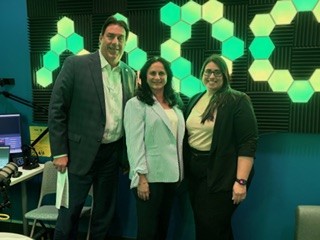
[00:00:10] Speaker A: Welcome to Kendall speaks. I'm Dr. Brian Stewart, Kendall campus President. Today we're very fortunate to have two of our most important stops on our journey here at the Kendall campus. That's admission and registration in financial aid.
Today we're going to hear from our directors who will lead us through areas at the Kendall campus and learn more about how their team supports students. Students every step of the way. With me today are our guest, Janet Infonzone, Kendall campus director of admissions and registration. Welcome.
[00:00:39] Speaker B: Thank you.
[00:00:40] Speaker A: And Odalis Portella, Kendall campus director of financial aid. Welcome, ladies.
[00:00:44] Speaker C: Thank you for having us.
[00:00:46] Speaker A: You guys are very instrumental in a lot that goes right here at the Kendall campus. And so we're very excited to have you today. First, let's start with you, Janet. Talk a little bit about your journey to the Kendall campus. How did you. How did you get to Miami Dade College?
[00:00:58] Speaker B: Well, my journey started not too long ago about in 2006 when I joined the Kendall campus as a part time coordinator at continuing education.
And then later in around 2014, I transitioned to admissions and registration. And since then I have been there serving as the director of the department.
[00:01:15] Speaker A: Very good, very good. Odalis, what about your journey to the college?
[00:01:18] Speaker C: So my journey for Kendall campus started in 1996 as a student.
[00:01:23] Speaker A: Oh, wow.
[00:01:24] Speaker C: And then I returned to Kendall campus in 2016 as the financial aid director.
Prior to that, I was at Hialeah campus as their director and then north campus as an advisor.
[00:01:35] Speaker A: Well, we're fortunate to have you here. Both of you have good experience and have been at different trails. Odalis, let's start with you. Talk a little bit about what your office does and tell our audience some of the ins and outs that maybe they might not know.
[00:01:47] Speaker C: So the goal for our department in financial aid is really to ensure that our students and their families have the support and guidance they need to access the financial resources to make college more affordable. That's what the financial aid office really does.
From the moment the student applies to the college, our team is guiding them, completing the financial aid application, submitting any required documentation, and then we determine eligibility for federal, state, institutional funds. And that includes grant grants, scholarships, any work study opportunities and loans that the students may be eligible for.
Our team also helps students understand how to maintain their eligibility and navigate important requirements such as academic progress.
And then throughout this time that the students are here at mdc, we work really closely with other departments to kind of ensure that they receive, you know, the holistic support that they need to stay on track and complete their Educational goals.
[00:02:43] Speaker A: That's great. And we'll get into a little later, but I know there's always a lot of changes from year to year in your world, and so we want to hear about some of those, and especially with everything going on today. Janet, tell us about admission and registration. It's such an important area. Also, not only does Odalis help with the payment and financial aid, but you help get our students in the right spots.
[00:03:02] Speaker B: Absolutely. So I always say that our departments, and speaking also for financial aid and in combination with admissions, our departments move students from the idea of I want to attend college to the fact that they are actually admitted and ready to enroll and succeed.
So from that statement, admissions process, their admissions application. We guide students through the Florida residency processes and how to pay in state fees.
We guide them through the process of how to submit official transcripts in addition to that, once they are in the classes. And in the process, we also process grade changes to student petitions, we certify enrollment, we process diploma requests. So we have the privilege of interacting with students from the first moment of the admissions application to the graduation point. We have interaction with them along every stage of their journey with us.
[00:03:55] Speaker A: And your office, too, also experienced lots of changes too, with all the policies going on.
[00:03:59] Speaker B: Absolutely, yes.
[00:04:00] Speaker A: Talk about how you two work together, if you would.
[00:04:03] Speaker B: Well, collaboration is key to what we do. Right. That is essential in everything that we do. We cannot work in isolation. And especially for admissions and financial aid, our processes are interconnected and they build on each other. An example is when students submit an admissions application, the admissions office has to make sure that every information is accurate so the financial aid area can receive successfully the FAFSA application under system, meaning that if there is a discrepancy on the student, date of birth, name, social, even high school, that will delay the process and that add additional steps for all the corrections that are required in order for the two areas to receive the accurate information from the students.
[00:04:43] Speaker A: Oh, Dallas, what about from your point of view, how well y' all work together?
[00:04:46] Speaker C: So, yeah, so I'll add that our teams really do work closely together to remove those barriers and ensure our students move forward with confidence.
Another example we can give you about our collaboration is the joint workshops that we host together for students and families. Right.
When they apply to Miami Dade, they can do their application, they can do their Florida residency, they can do their FAFSA application all in one location.
And that really helps prevent the delays, keeps the students informed, and it ensures that they have the financial resources and the academic support that they need to start classes and stay on track towards completing their program.
[00:05:22] Speaker A: Very good, Janet. I know that in the last several semesters we've work to lessen the time it requires to get a student enrolled at Miami Dade College. But talk to us about some of those first steps that a student would need to go through to enroll with us.
[00:05:37] Speaker B: Well, the first steps are very simple. The first one is going to our website and submit that application, as you mentioned. Now, it's easier, it's interactive. Students can complete it in less than seven minutes. It used to be, what, 30 to one hour?
[00:05:50] Speaker A: Yeah, that's right. And I think it's important they know that we're trying to speed that up.
[00:05:53] Speaker B: Yes, we're trying to improve that. And that has been a great success.
And once they do that, they receive an email with steps to follow with their ID number.
[00:06:02] Speaker A: Okay, great.
[00:06:02] Speaker B: So on those steps, the next one will be to create their MDC account to submit test scores, official transcripts, to complete the FAFSA application as soon as possible. So that guarantees that the process is complete on time and they're ready to enroll in the classes as they want.
[00:06:18] Speaker A: So we just need them to go online, make that first inquiry, and then the rest of the steps will kind of follow.
[00:06:23] Speaker B: Absolutely. And we're here if, whenever in doubt, come and ask. We're here to help them.
[00:06:28] Speaker A: Including on weekends too, right?
When we get there?
[00:06:30] Speaker B: Absolutely.
[00:06:31] Speaker A: Registration. What are some of the common questions that you hear that come through your office?
[00:06:36] Speaker B: Well, a lot of students want to know about how to apply, what documents they need. They want to know if the application is complete or not, what they should do next. And once they get closer to the registration period, then they want to know about deadlines, how to enroll for the classes, about financial aid, how to clear a hole.
So our role is to make the process easier for them to know that we're here for them. And whenever, again, whenever in doubt, they should come and ask. We have resources to help them. They are not to figure it out on their own. We're here for them.
[00:07:07] Speaker A: Good. I'm sure you probably have some common mistakes or errors that occur.
Tell our audience what those might be. So that might help our students, our future students, avoid those delays.
[00:07:18] Speaker B: Absolutely. The most common one is waiting too long. Many students wait until the registration opens to do it all. They want to do the application, they want to submit transcript, they want FAFSA complete and approved. They want to do it all in one day. So I always tell them, work and do the things with time, little by little. If we break it down, it becomes easier and we can help them along the way.
[00:07:41] Speaker A: And we have so many terms at the college. You know, for instance, this spring we had 16 and 14 week and 12 week and then second eight week.
We have summer registration approaching, which is. It actually started right, starts tomorrow.
[00:07:53] Speaker B: The open registration starts tomorrow. And that's one of the reminders that I made a note to remind students about Summer registration. Open registration starts tomorrow. And then the other important deadline is that the best event of the year is coming up. We have commencement coming up on April 25th. So those students that are thinking about graduation, this is the time for them to graduate and get ready to come and celebrate with us on April 25th.
[00:08:16] Speaker A: Yes. And it's a big celebration. I appreciate you reminding us of that. Well, Dallas has shipped over to financial aid. It can be really confusing for students. And we talked earlier about how the government and everybody changes things. And we've had FAFSA a couple years ago. We haven't had it so much lately. But talk a little bit about examples and ways that you can kind of simplify helping a student get their financial aid.
[00:08:38] Speaker C: So really it's more about the student coming in and coming, asking their questions, their families, getting all the documentation that they need and we can help them. The simplest way is for them to come in and we help them do the whole process.
[00:08:53] Speaker A: That's great, that's good. And we, I mentioned fafsa, talk to our audience about what that is. Let's give a layman's term for that and why it's so important that they complete that.
[00:09:02] Speaker C: So FAFSA is short for the Free Application for Federal Student Aid. And it's the main form that students need to complete to apply for financial aid. So not just federal aid.
It's really the starting point to access like institutional aid, state aid, scholarships, grants, even work study student loans.
So really the FAFSA is the starting
[00:09:25] Speaker A: point, kind of the gatekeeper. Everybody wants you to complete that for
[00:09:28] Speaker C: everything, to get the ball rolling into what kind of funding resources they can
[00:09:32] Speaker A: receive and when should a student apply for that and what are some of the deadlines that creep up on our students.
[00:09:38] Speaker C: So typically the FAFSA will open up on October 1st of the preceding academic year. So, for example, for the 26, 27 academic year, the FAFSA will open up on. It actually opened up September 25th of 2025, which was the earliest that it's ever opened up.
Typically it'll open up October 1st.
So it runs through June 30th of. Of the following year. So, for example, the FAFSA will be open for 2627 from September 25th, 2025 to June 30th, 2027.
So it gives the students enough time to apply, and that'll cover fall of 26, spring of 27, and summer of 27 terms.
Now, one thing that's really important for students to remember is if they want to start, get a head start. And we always recommend that. Right. To start in the summer.
So if the students want to start in summer of 2026, they should complete the 2526 FAFSA because they that will cover the summer 26 term.
[00:10:36] Speaker A: And I know we have a lot of events throughout the year, and your team helps students fill out that fafsa, Right. And talk a little bit about some of those events. I know as soon as we mention some, they'll be out of date. And then some of the things that they need to make sure they have to get all the information in the fafsa.
[00:10:50] Speaker C: So on our website, we have all the workshops that we have available on campus. And we usually have two workshops a week. One is in person, one is virtual. So we give students that option. We also go out to the high schools and do fast for nights, and we'll have special events on campus, like when we have open house, or we'll have FAFSA session events that we'll create for students to come in and their families.
Really, the documentation, it's so easy now because before they used to have to bring their tax returns, they used to have to bring their Social Security number.
All of that really, except with the Social Security number and any immigration documents that they have. Those are the really the things that they need to bring. The tax return now is automatically uploaded once they give consent on the fafsa, their tax returns for their parents, their spouses.
So by entering their Social Security number on the application, all that information is already automatically uploaded. So they don't need to bring the tax records anymore. It's just really their Social Security number have that and their immigration information.
[00:11:53] Speaker A: That's great, because I learned something there. I didn't realize it had become that efficient. And so bottom line is the. They shouldn't feel stressed. Just come see us. We'll help them get through it. And it's not as difficult to process as it used to be.
[00:12:03] Speaker C: No, it's actually a lot easier. They reduced the questions from, you know, maybe a hundred separate questions, and now they've put it in sections, so. And there's kind of like skip logic on the fafsa. So if they answer a certain way, it's not going to ask them maybe three other questions that may they may not need to answer.
[00:12:21] Speaker A: It's a smart kind of.
[00:12:22] Speaker C: So it's got a really smart process and it's been really beneficial to our students.
[00:12:27] Speaker A: That's great. That's great, Janet. Let's go back to the registration process. I won't age myself here. Maybe I will. But I remember back in the day when I registered, we stood around the arena registration and it was real long lines. And I know we still have long lines, but talk about the process and how it can be overwhelming for students and kind of how you can help them get through that process.
[00:12:47] Speaker B: My biggest advice is to take it on small steps. Start the process and break it down into pieces so they understand pieces piece by piece and they complete and they move to the next one so they are ready when that registration process, meaning getting to a class, is there.
And our lines are almost gone because now we have many services online and we're very interactive that way. We have virtual appointments so students don't have to come and wait on the line. So we have simplified many of the processes on long waits.
So the key is to start early, stay connected and let us help you. That's what I tell everyone that come across our counters or our offices or our workshops to start early and stay connected with us, attend the events if they have questions, reach out to us. So the process becomes so much easier when they break it, break it out into steps, and they reach out for help whenever they need it.
[00:13:39] Speaker A: I like that little saying you had. Say it one more time for me.
[00:13:42] Speaker B: Start early, stay connected and let us help you.
[00:13:45] Speaker A: That needs to be a shirt or that needs to be something we put out. I like that a whole lot.
Let's talk a little bit Odalis about what advice you would give students who maybe don't qualify for financial aid and know that because of whatever their situation, they're not going to qualify.
[00:13:59] Speaker C: Well, I always say apply regardless because you never know what you're eligible for and because the FAFSA is that gateway application to all the other resources that we have on campus and state funding, it's really important for them to complete it.
They've changed the formula so so many times, the Department of Education of who's going to receive funding that at this point we tell the students, apply and you never know.
We've seen a lot of students where typically before, it used to be called the estimated family contribution. Now it's called the Student Aid index. That number, the higher it goes, typically is aligned with less funding. But now we've seen students with high, what we consider high SAIs to receive at least a minimum Pell Grant. Right, right. So we always encourage students to apply because, again, it's that gateway application for them to receive all sorts of other funding.
[00:14:53] Speaker A: And you never know what you might qualify for.
[00:14:55] Speaker C: Correct.
[00:14:56] Speaker A: You know, one of the things that the college is proud of is 98% of our students graduate debt free. And I know besides financial aid, there's also scholarships that are available and student assistance. Talk a little bit about those programs and how they can help our students.
[00:15:09] Speaker C: Absolutely.
So we have our MDC General Scholarship, which opens up every year, and it's open right now, and that gives students $1,000 a year, so $500 per semester. And all they have to do, it takes less than three minutes to apply. They fill out a questionnaire, and we actually match students to the scholarships that are available through the foundation and some of our donors.
So that's the first thing I would say, always apply for that MDC General Scholarship because we match the students. Right. They won't have to do the legwork of actually researching and looking for things that may align with what they're studying. Their GPAs, their financial need.
Of course, our first year scholarships, right? So we have our Presidential Scholars, Rising Scholars. We have American Dream Scholarship, our fast track for the summer. So those are scholarship opportunities that students can, can, can reach out for.
There are also state grants and scholarships. So we work with Bright futures children and spouses of deceased and disabled veterans. The Jose Matisse Scholarship, Florida Farm Worker Student Scholarships, Florida First Responders Open Door Grants, the Florida Student Assistance Grant, the First Generation Grant. So there's a lot of state grants, and part of that is submitting the FAFSA application and seeing what the student's need is and what their merit is.
Students also have the opportunity to work on or off campus so they can earn money through the student assistant program or our work study programs. And this program really helps students build valuable employment skills so they're earning money while they're coming to school. They gain those employees important work skills, and then they can put that on their resume and show that they already have some type of work experience.
That information, if students are interested in that, we have a work study programs page on our website, and it has all the information about the different programs we have available and how they can apply. And then finally, I do want to mention, because a lot of students don't know this, we have a tuition payment plan. So. So if you don't qualify for any of the other resources that we have available, which is 98% of our students do receive some type of assistance. Right.
This payment plan through nelnet really helps the students and families manage those college costs. So it'll break down their tuition payment for the term in monthly installments so they don't have to make one large payment at the beginning of the semester. They can break it down up to, you know, and throughout the semester. And then the funds they sign up for it. There's an application fee. But the best part of it is that there's no interest. It's not a loan, it's a payment plan. So there's no interest, there's no credit check. And really it can help the students go ahead and make the payments while they are taking their classes.
[00:18:12] Speaker A: Wow, that's amazing. You, you gave a lot of information there from all the scholarships and all the opportunities and the nail net and all that. What advice would you give? Some. A student who's maybe doesn't know where to start because there's so many opportunities for them. How would they learn which of those avenues are best for them?
[00:18:29] Speaker C: Come and talk to us.
[00:18:30] Speaker A: Okay.
[00:18:31] Speaker C: We meet students where they're at so they can call us on the telephone, they can come to our office in person. They can schedule a virtual appointment.
Come and talk to us. The best thing is reaching out to us. Come to the events, talk to us. Explain your situation to us. We'll provide you with all the information and resources you need.
[00:18:49] Speaker A: That's great. And I would be remiss if we didn't talk a little bit about athletes because you work really closely with our athletes. So talk a little bit about the role you play in helping make sure our athletes are progressing as they should.
[00:19:01] Speaker C: So what we do in the financial aid office is we really help the student athletes with their stipends, with their book advances so that they can make sure that they get their books on time. If they're not using digital fees, they can get their supplies and then their monthly stipend. So we make sure that they get that living expense that they need to get through the semester.
[00:19:19] Speaker A: That's great. I appreciate for telling us that.
Janet, let's go back to you and then we'll ask Odalis the same question. What would you say to prospective student or family who's thinking about coming to Miami Dade College, Kendall campus, and the support they might Receive? What advice would you give them?
[00:19:34] Speaker B: I will say that the Miami Dade College Kendall campus support is truly a team effort. All student services unit work closely together to ensure student success. And going back a little bit into one of Odali's comments about the workshops that we collaborate and we do together, we cover Florida residency, which is a big process that admissions completes and guides students in order to pay in state fees, which is a big part that has implications on financial aid area. So in this collaboration, we are there present and we explain to the students what the process is, how they need to submit the form, what immigration documents they need to submit the state documents. And sometimes we invite parents as well, because at the end of the day, they are the ones that are doing this piece for students that are younger than 24. So they need to understand the implications of this and how easy it could be to prove Florida residency when you understand the process and you have the right documents the first time. So we do that in collaboration a lot. And that's part of the team effort that we do at the Kendall campus.
We know that college is a big step, and for many families, this is a brand new experience.
So everything that we do, we do a thinking on the students on that student center approach. So we work towards what they need and we meet them where they are. So I will say that the support that they get at this campus is really holistic, and we work very hard every single day to make sure that that's accomplished.
[00:21:00] Speaker A: I agree. I think that's right. Talk a minute about how someone would establish residency. How long does it take? Like if they just moved into Florida? And some of those rules.
[00:21:09] Speaker B: Okay. So in order for students to be eligible to pay in state fees to complete this Florida residency process, they have to provide documents that support that residency state. Twelve months prior to the beginning of classes.
[00:21:22] Speaker A: Okay, that's what I wanted to hear you say. Okay.
[00:21:23] Speaker B: And if students are younger than 24, then mom or dad or a legal guardian will have to do this process for them. And they are the ones who are responsible for submitting the state documents.
And the student will need to provide their eligible immigration documents, regardless of they are the claimants or not. That's part of the process. And the state documents could be as simple as a driver license, a car registration, a voters card, which are very common in the process. And once they have that, the process becomes so much simpler. Students can do that throughout the semester. And this is something that not everybody knows. It doesn't have to be done the first day of Class, you still have the chance to prove your in state throughout the semester.
[00:22:05] Speaker A: Okay, great. I appreciate you saying that. Dallas. Did you have something to add?
[00:22:08] Speaker C: Well, I'll add to that. Just like the Florida residency, you know, it could be done throughout the semester. Financial aid application can also be done if the student has consistent registration each semester. They could even apply in June and we could still process the application and award them for previous semesters as long as everything meets the eligibility criteria. So don't get discouraged, apply. It's never too late.
[00:22:33] Speaker A: Never too late.
[00:22:34] Speaker B: And we're here to help.
[00:22:35] Speaker A: And I want to say, you know, the Kendall campus is the best, but we have other colleagues in other campuses that do similar things. Right. You want to talk a little bit about your colleagues and then we'll talk about registration, admission too, so.
[00:22:46] Speaker C: Well, some. We have five colleagues that are dual roles, so they do both admissions, registration and financial aid. And they're fantastic. And those are at what we typically call our smaller campuses. But so we work together with them. And then I have my colleagues at north, which is. What do we say? That's our biggest competition. Right, North.
[00:23:10] Speaker A: Friendly competition.
[00:23:11] Speaker C: It's friendly competition, but we love to push each other. And beta9 beta is a director there. We have a fun competition with fast applications and with scholarship applications.
[00:23:25] Speaker A: So.
[00:23:26] Speaker C: So. But we really push each other and I think we have a great team.
We work really well together. Financial aid is looked at really college wide. We can process. Yeah, right. We can process applications with students who apply from any campus, really. So I think just like admissions.
[00:23:44] Speaker B: Yeah, we're very similar in the way that we're structured. Yes, we are in a way district, but we belong to the campus and we belong to the student services of the campus. We represent that campus, but we represent the college and we try to work seamlessly across campuses so that our students have the same experience wherever they go. So being district in a way guide that work. So it's the same across campuses. So we have the same rules, the same processes. And like Odalis mentioned, it doesn't matter if the student is coming from Hialeah or from Wes. We will serve that student because that's a college student. If they're here, we're not going to send them away. We're going to serve them the same way that we treat a kendo campus student. So we collaborate very well. And I think that speaks from admissions and financial aid as well.
[00:24:30] Speaker A: Thank you for saying that. That was what I wanted to hear you say. And also the consistency I think is very Important.
And because you guys do amazing work and we do, it doesn't matter where you go. We're one college and we're just glad to have students at whatever campus. You guys have shared an amazing amount of information. Janet, give our audience your contact information. Dallas, yours next please.
[00:24:49] Speaker B: Well, for admissions and registration, our phone number is 305-237-9100. And for, for the email it will be admissionsdc.edu.
[00:24:59] Speaker C: and for financial aid the main line is 305-237-9300. And our email for Kendall campus is kfin aid dc edu.
[00:25:10] Speaker A: All right, use those informations and, and, and get in touch with us. Before we close our our podcast today, we like to turn the, the microphone around and let you ask me a question. So I'll open it up to either of you to ask me anything you'd like.
[00:25:22] Speaker B: Well, how do you see the future of the Kendall campus?
[00:25:27] Speaker A: Wow, that is a great question.
Just as we're about to open our new AI hub, we're really going to see I think technology take off in the near future here. We also are in the process design our new STEM building that hopefully will connect Building 6 and 2 in that vicinity. So I really think Kendall is getting ready. We're already known so many people in the community and I've told this story several times on this podcast, but when I'm in the community and someone calls a south campus, you know, when they came here, and I just see so many people in our community that are still in our community and still love the Kendall campus. So I think we're going to continue to be kind of the heart of this community.
We are still going to have a lot of students that come to us and transfer, but I think a lot of students are going to come to us and get a bachelor's degree or a certification AI and, and go straight to the workforce. So I think it's a bright future. We're going to continue to do everything that we're doing and with your guys help, I know it'll be successful.
[00:26:24] Speaker B: Absolutely. Count us in.
[00:26:27] Speaker C: Where do you see our department supporting that goal?
[00:26:30] Speaker A: You know, I think first of all I have to give you guys kudo for how creative you are and how you meet our students where they are. I've never been at an institution that does it as well as you guys do, so I think we're going to continue to have to. And of course the pandemic kind of changed the way we did a lot of things and you guys adapted well and I think we're going to have to continue to adapt with AI and technology.
And so, you know, registration, we're always talking about numbers. We're always talking about how our scholarships and financial aid are. So I just think we all need to continue to stay at the table and communicate. And who knows what the next AI is in two or three or five years.
[00:27:05] Speaker C: That's going to be an interesting journey.
[00:27:07] Speaker A: Yeah. Well, I want to thank you two ladies for giving us this great information. Janet Infantzone, director of admissions and registration.
Odalis, you're the director of financial aid. You guys have been amazing. It's been a great conversation. I want to thank our head writer, Christine Saenz, producer Alex Bello, head producer and executive producer, Paul Klein. Thank you for being with us today, and goodbye for now.